
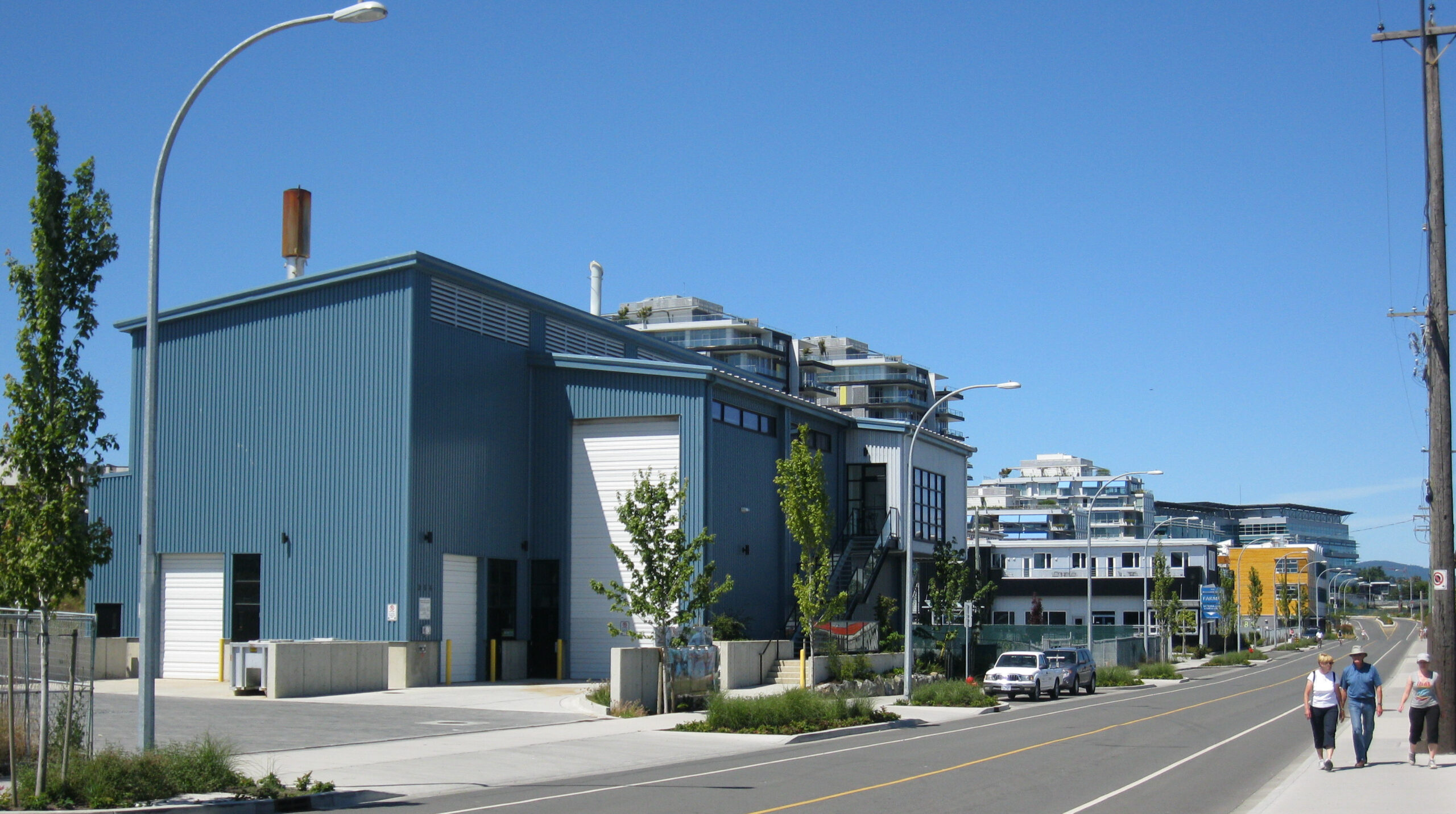
proven tech, Clean power
Nexterra’s gasification system converts any carbon-containing biomass waste into clean energy.
how our technology works
Nexterra’s gasification system works by using heat, not just fire, to transform organic waste into a clean-burning fuel called “syngas.” By carefully controlling the air in a “starved air” process, waste is chemically broken down, resulting in far lower emissions and significantly higher efficiency compared to traditional methods.
Our systems can process many challenging renewable waste feedstocks while still meeting the tightest emissions regulations. The resulting versatile syngas acts as a direct substitute for fossil fuels, allowing you to generate heat, steam, or electricity from the waste you produce, and then use it as a fuel source to power your system.
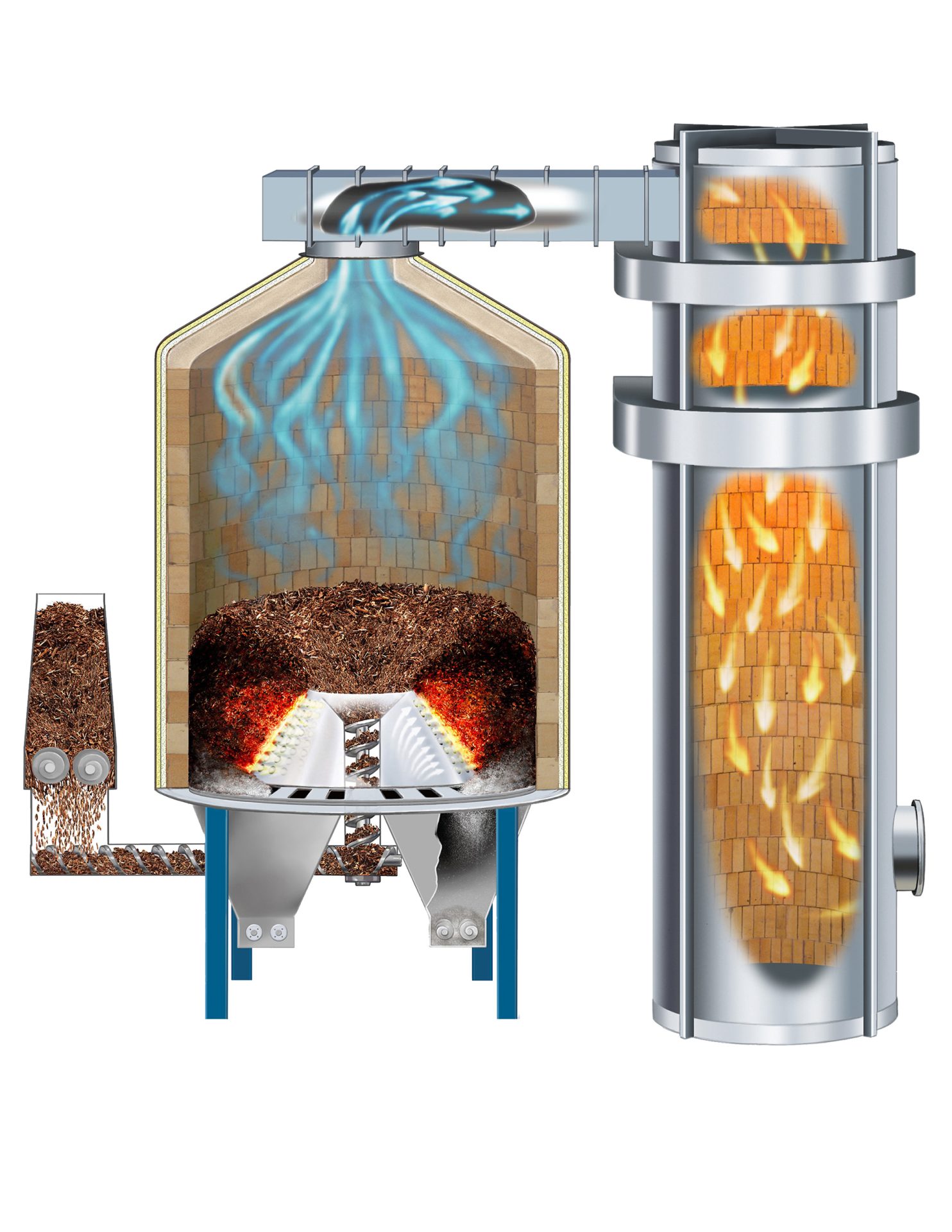
How Nexterra’s Gasification System Works
Step One: Fuel In-Feed System
The metering bin provides short-term fuel storage and ensures a constant supply of fuel to the gasifier. Fuel is conveyed by a horizontal screw conveyor from the metering bin to a vertical screw conveyor that pushes fuel into the gasifier.
Step Two: Gasifier
Within the gasifier, the fuel moves through progressive stages of drying, pyrolysis, gasification, and reduction to ash. Gasification media (air/flue gas or steam/oxygen) is introduced through the cone into the fuel pile. Partial oxidation, pyrolysis, and gasification occur at 1500 — 1800 °F (815 – 980 °C), and the fuel is converted into “syngas” and non-combustible ash. Temperatures in the fuel pile are tightly controlled and kept below the ash melting temperatures to ensure that there is no formation of “clinker” and that the ash flows freely.
Step Three: Automatic Ash Removal System
As the fuel is processed in the system, it is reduced to non-combustible ash. The ash migrates to the grate at the base of the gasifier, where it is removed intermittently through a set of openings. When hydraulically activated, the rotating grate opens, and the ash drops into two ash hoppers. Each ash hopper has two parallel screws to convey the ash to a collection conveyor and an enclosed ash bin.
Step Four: Syngas
Syngas exits the gasifier at 500 — 700 °F (260 – 370 °C). The syngas can be combusted in an oxidizer with the resulting flue gas directed to heat recovery equipment (e.g., boilers, thermal oil heaters, air-to-air heat exchangers), fired directly in industrial boilers or kilns, or cleaned for the production of higher value gases and chemicals.
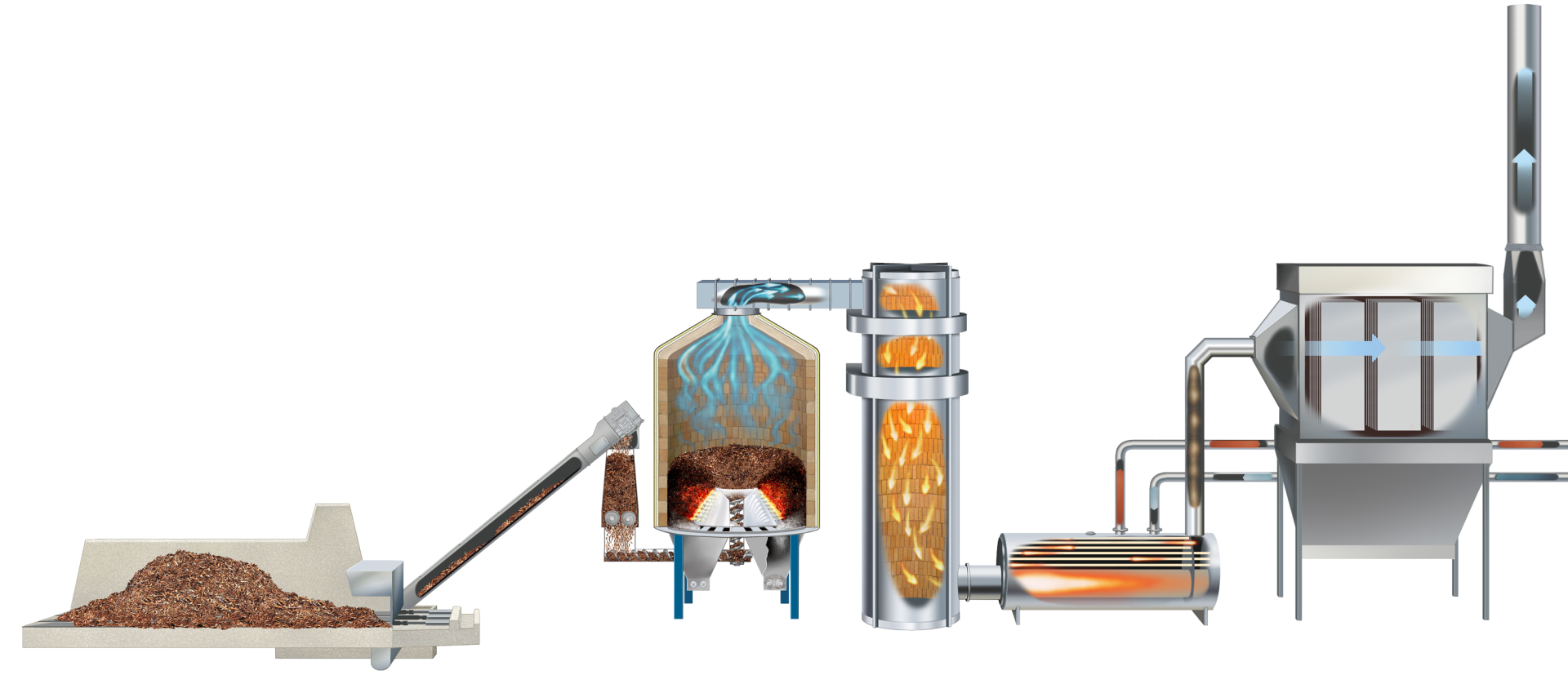
typical system components
Step One: Fuel In-Feed
Wood waste (including bark, mill residue, clean recycled construction material) is loaded into the fuel bin and conveyed to a metering bin near the gasifier.
Step Two: Gasifier
Fuel is processed in stages including drying, pyrolysis and gasification. The wood is converted into “syngas” that can be used to displace energy produced by natural gas.
Step Three: Oxidizer
The syngas is conveyed into the oxidizer where it is combusted with the resulting flue gas directed through a boiler.
Step Four: Boiler
The boiler produces hot water, steam, hot oil, or hot air depending on system requirements. In certain systems a back pressure turbine may be added to produce electricity.
Step Five: ESP
After exiting the boiler the flue gas is cleaned in an electrostatic precipitator to remove up to 98% of particulate.
Powerful features
01
Low Air Emissions
Tight management of temperature, residence time, and velocity reduces emission formation (PM, VOC, CO, NOx). Results in easier permitting and lower cost for emission controls.
02
Low Particulate Carryover
“Quiet” fuel bed results in a low-velocity gas with very limited carryover of particulate matter. This results in lower boiler fouling and refractory wear.
03
Feedstock Flexibility
Can accommodate a wide array of feedstocks, from sawmill residues and construction & demolition debris to refuse-derived fuel (RDF) and other organic wastes. Precise process control reduces problems typically associated with “hard to handle” waste fuels such as “ash clinkering” and NOx formation.
04
Design Simplicity
The system has very few moving parts, which means lower lifecycle costs, parasitic electrical load, and maintenance costs.
05
Syngas Versatility: “It’s a Gas”
Syngas can be fired directly into boilers, kilns, or furnaces. There is potential to replace fossil fuels in existing fossil fuel-fired assets.
06
Green Fuels + Chemicals
Syngas (CO & H2) is a building block for high-value fuels and chemicals. Gasification enables the conversion of renewable waste feedstocks into high-value “green chemicals” or “green fuels”. All combustion can do is convert waste feedstocks into heat.
FAQS
What is biomass gasification and how does Nexterra’s technology work?
Biomass gasification is a process that uses heat, not direct combustion, to convert carbon-containing biomass waste into a clean-burning fuel called syngas. Nexterra’s technology uses a carefully controlled “starved air” process to break down organic waste at high temperatures. This produces significantly lower emissions and higher efficiency than traditional combustion methods. The resulting syngas can then be used to generate heat, steam, or electricity, or as a substitute for fossil fuels.
What types of biomass waste can Nexterra’s gasification system process?
Nexterra’s gasification systems are designed to process a wide range of renewable waste materials, including wood waste, construction and demolition waste, biosolids, and refuse-derived fuel (RDF). Our precise process controls allow the system to handle even difficult feedstocks while reducing common issues such as ash clinkering and excessive NOx formation. This gives clients greater fuel flexibility, lower fuel costs, and less dependence on traditional energy sources.
How does Nexterra’s gasification technology reduce emissions?
Nexterra’s gasification systems tightly control temperature, residence time, airflow, and gas velocity throughout the process. This careful control minimizes the formation of particulate matter (PM), volatile organic compounds (VOC), carbon monoxide (CO), and nitrogen oxides (NOx). Compared to conventional combustion systems, this results in lower air emissions, simpler permitting, reduced emission control costs, and stronger public acceptance.
What can syngas be used for?
Syngas is a versatile renewable fuel that can be used in boilers, kilns, engines, and other energy systems. It can replace fossil fuels to generate heat, steam, and electricity using the waste produced on-site. Syngas can also be used as a building block for fuels and green chemicals, creating opportunities to transform waste into higher-value products rather than simply disposing of it.
Why choose Nexterra’s gasification system over traditional combustion technology?
Nexterra’s gasification technology offers lower emissions, greater fuel flexibility, and higher efficiency than traditional combustion systems. Our systems are engineered with very few moving parts, resulting in lower maintenance requirements, lower lifecycle costs, and greater reliability. They can also make use of existing fossil fuel infrastructure, allowing organizations to transition to renewable energy while protecting past investments. In short, Nexterra turns difficult waste streams into a practical, lower-carbon source of energy.
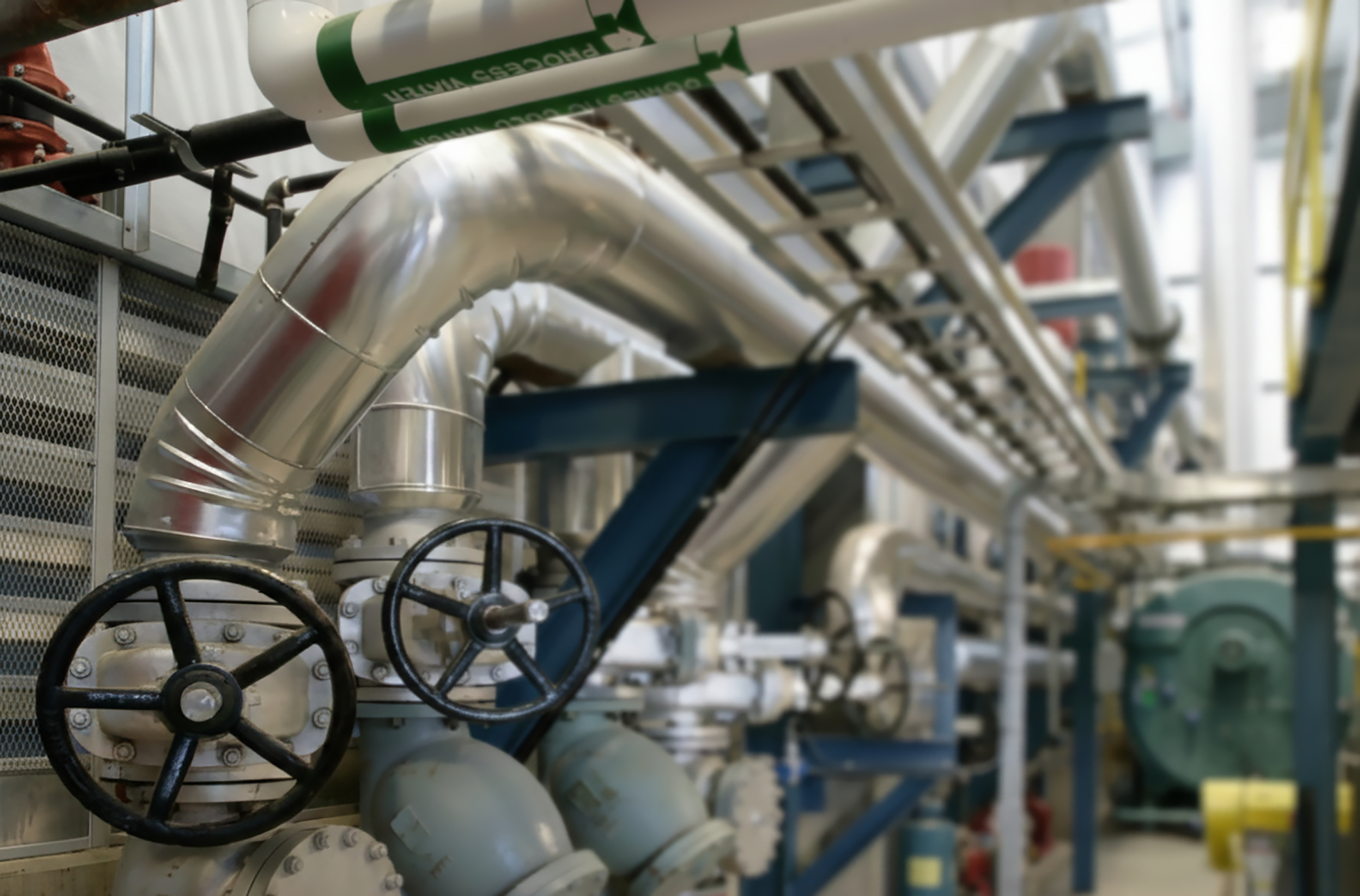
Collaborating for a Better Future
Nexterra’s core expertise is the design and supply of clean, reliable gasification systems that create heat and power from local, non-recyclable waste. Our innovative systems are ideally suited to a wide range of energy applications, including district heating, industrial process heating, community-scale power generation, and others. Nexterra is seeking to collaborate with alliance partners in the development of new solutions and new markets, as well as the execution of projects in Nexterra’s established markets. Whether you are an EPC firm, an equipment supplier, a technology developer, or an independent power producer, there may be an opportunity for us to create value by working together.